Understanding Time Frames in Forex Trading
The observation of exchange rate fluctuations is always influenced by the factor of time. Therefore, it is essential to understand the definition of Time Frame in Forex before trading.
When we start trading, we often open a trading platform like Metatrader (MT4/MT5), where prices in the Forex market are displayed in the form of charts. These charts depict the price fluctuations of a currency pair in the Forex market, showing whether it is rising, falling, or remaining stable. However, in reality, our observation of price fluctuations also depends on the Time Frame. Therefore, before proceeding with the analysis of price movements, we need to clearly understand what Time Frame is and its role in Forex trading.
What is Time Frame in Forex?
Time Frame in Forex is a specific period used to observe price fluctuations on the chart. In different time frames, the representation of prices can also be understood differently. For example, the EUR/USD currency pair may have decreased in the past hour but increased throughout the day. All of this can be clearly seen on the Forex chart when we change the displayed Time Frame.
In simple terms, a Forex chart is formed from price fluctuation data within a specific Time Frame. Therefore, if the Time Frame is changed, the price fluctuation data will also change. For example, let’s consider the comparison of price fluctuations of EUR/USD in the 1 Hour Time Frame (Hourly/H1/M60 - 60 Minutes) and the 1 Day Time Frame (Daily/D1) below.
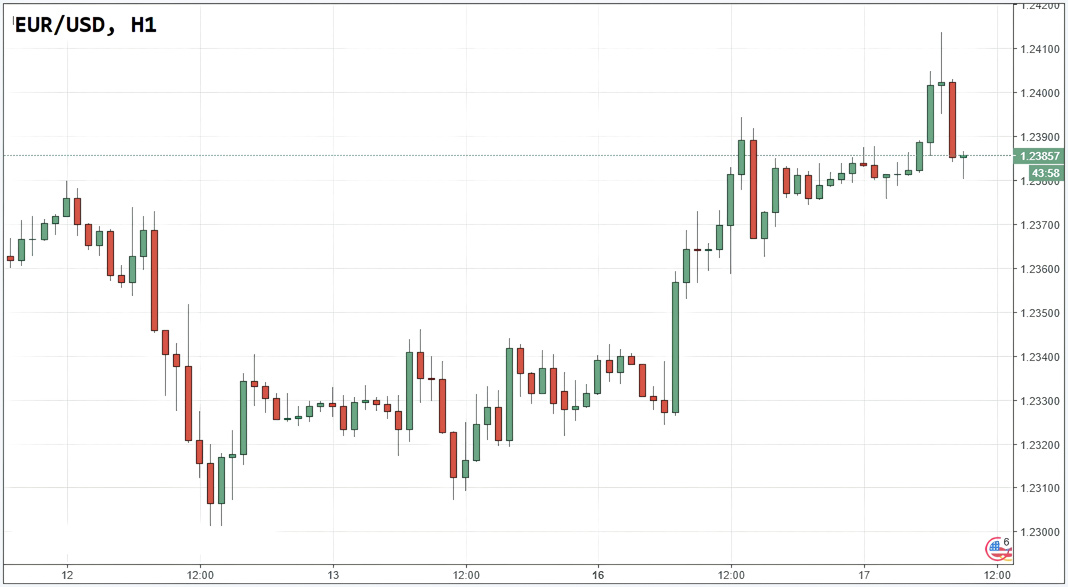
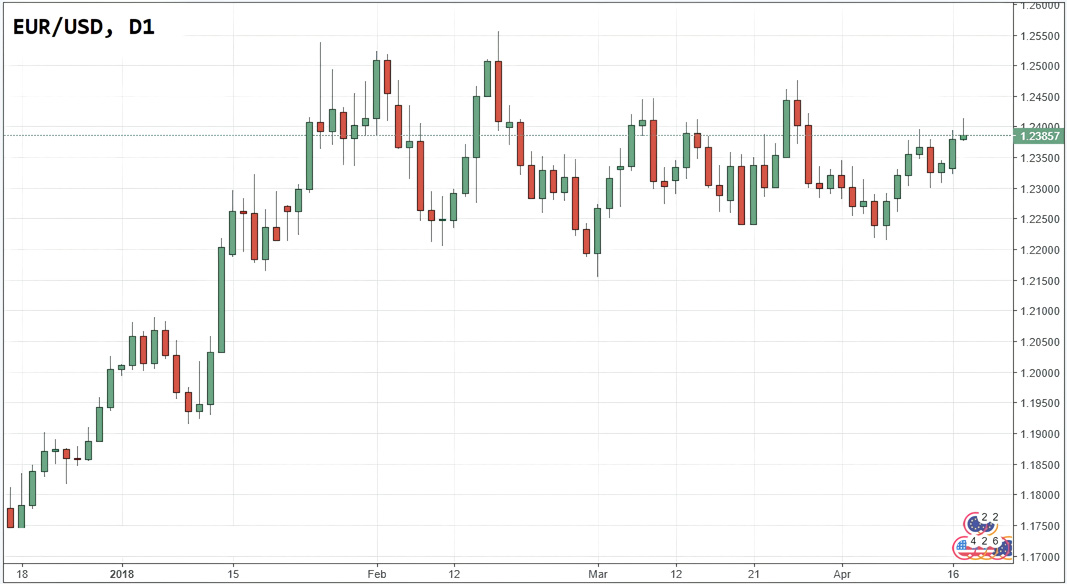
On the Candlestick chart in the 1 Hour Time Frame (1 hour time frame/H1), each candlestick represents the movement within one hour (opening price, closing price, highest and lowest price). Meanwhile, in the 1 Day Time Frame (1 day time frame/D1), each candlestick represents the entire movement of a trading day. The Time Frame will indicate the time required to form a candlestick; therefore, the chart will differ depending on the time frame you choose.
The commonly used Time Frames in Forex are 1 Minute (M1), 5 Minutes (M5), 15 Minutes (M15), 30 Minutes (M30), 1 Hour (H1), 4 Hours (H4), 1 Day (D1), 1 Week (W1), and 1 Month (MN). On trading platforms like Metatrader, there are usually available Time Frame options, and you can switch back and forth flexibly to find the Time Frame that best suits your Forex trading style.
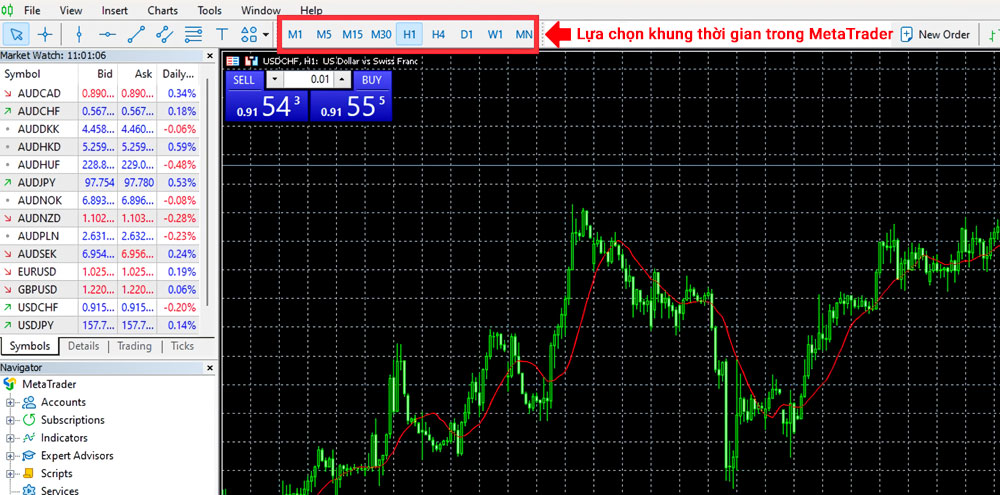
How to Choose a Time Frame in Forex?
Choosing a Time Frame in Forex is neither easy nor difficult. Typically, traders will choose based on the trading system they are using. For example:
- Traders Using Scalping System
With the scalping system (a form of short-term trading), traders can open and close trades in a very short time, sometimes just a few minutes. Therefore, they often use small Time Frames like M1, M5, or at most M30. To successfully apply this strategy, traders need a broker with fast execution speed, low spreads, and high stability etc. - Traders Using Day Trading System
As the name suggests, “Day Trading” is the form of opening and closing Forex trades within the same day. For Day Trading, traders typically use Time Frames from M30 to H1 (30 minutes - 1 hour), along with H4 (4 hours) or D1 (1 day) to reference the overall trend. - Traders Using Swing Trading System
With the Swing Trading system (medium-term trading), traders can open and hold trades for several days, weeks, or even months. Therefore, the Time Frames commonly used range from H4 to W1 (4 hours - 1 week) or MN (1 month).
Each trader can trade with just one Time Frame or multiple ones. Lower Time Frames often have too many small fluctuations, making trading signals prone to noise, while higher Time Frames help observe the overall price trend more clearly. Therefore, when choosing a Time Frame in Forex, you should carefully consider these factors.
After selecting an appropriate Time Frame, what is the next step you need to take? In Forex trading, choosing a Time Frame is just the “beginning” before you proceed with technical analysis. Next, you need to identify support and resistance levels in the price movements of each currency pair.